Take me into your dreams
to a place where I board other trains
it is October now
and it shows on me
Juice Leskinen, Syksyn sävel
Journalist in Brooklyn, New York
Take me into your dreams
to a place where I board other trains
it is October now
and it shows on me
Juice Leskinen, Syksyn sävel
Victor Davis Hanson, military historian, in conversation with Peter Robinson (from 24:05):
My father's first cousin, his mother died in childbirth, and his father was blinded in a farming accident, so he grew up with my father. They were inseparable. They went to the University of the Pacific under Alonzo Stagg and played as ends on the football team.They joined the Marine Corps. The family lore gets hazy here, [but] somebody hit a Marine officer. They were big Swedes and one of them had to take the blame. The military said, “either you’re gonna get kicked out of the Marine Corps, or we’re gonna fix you, Hanson, we’re gonna send you to this new B-29 program where everybody gets killed. We heard it’s just the worst thing in the world.”
So they kind of decided [that] my father was the one that hit the person, so [his cousin] Victor went on to the 6th Marine Division and fought the atrocious battle in Okinawa, where he was killed on the last day, of Sugar Loaf Hill.
When I wrote the book Ripples of Battle, one of the people who in his 90s read the book, [contacted me] and said, “I have his ring. When he was killed on the last day he was a big Swede and we couldn’t bring him down. His hands swelled, so we cut off the ring and when I got back I called your grandfather, and in broken Swedish he said, ‘I don’t want to talk about it.’ So it’s on my mantle.” So he sent it to me.
My father, the irony is that he went to the B-29 program, went over to Tinian and he flew 40 missions as a central fire controller. Of the 16 planes in his squadron I think all but two were shot down or crashed due to engine failure. So the person who was supposed to die lived and a person who had a better chance of living died.
[So your dad named you Victor.]
I remember him saying to me, “it’s gonna be very hard, you’ve got a real burden because he was an all star athlete, and he was killed, I don’t know if you can live up to it, but you got to try.”
[You have kids, now you're a grandfather. How do you make them believe, how do you make them understand, that this happened?]
That's why I tried to write the book. When I go to downtown Palo Alto, I go to New York, or on my farm, it's nice to see the security, the prosperity, everything we have. I look at the world abroad and I see democratic governments all over Europe and Asia and all these miracles going on.
I say to myself, none of this would have happened if it wasn't for these people in the United States and their counterparts in Britain, in Australia, Canada, and the Soviet Union as well. And I think, wow, they were willing to give up everything for some idea.
And I ask myself, in bouts of melancholy, was it worth it? What if they came back and they looked at our culture today -- was this what it was all for, is this what dying in Okinawa was for, when you're 22? Or getting blown up in a B-29 when you're 18? I hope it was.
I think we have to take a deep breath and stop looking at history as melodrama, where we go back and look at the past and use the value system of the present to pick winners and losers. History is tragedy, and we should really instead say, “given the material constraints put upon them, and given what they knew at the time, how they did what they did in World War II is a miracle, and we are indebted every day of our lives to them.”
We need to start honoring people who in the past did things I'm afraid to say I'm not sure that I could do, that my generation could do. When I was 21 years old, I was in graduate school studying Greek. When my father was 21 he had ear infections, sinus infections, and he was in a B-29 high above Japan and emergency landed in Iwo Jima and almost everybody was killed. He got the highest medal of the Air Force, the Distinguished Air Medal, for taking a 500 pound napalm bomb with his hands that was locked in the bomb bay and throwing it out. I can't think of anything I've done in my entire life like that.
I think this generation owes a lot to the generations that came [before]. This is why I get so depressed with these contemporary controversies, where people don't want to do this [or that], or they don't think they have to honor the flag.
They don't understand that somebody just handed them a country. They think it's this -ism or this -ology, and it's not good because it's not perfect. They don't understand what they started with. That generation said, we just have to be better than the alternative. The alternative was Japanese Holocaust, German Holocaust and what the Italians did in Africa, it was a Holocaust. We didn't do that, yet we say, "well, we weren't perfect, therefore we weren't good." No, we were very good, what we did in World War II, and we need to remember.
There is a line between self improvement and self immolation, between clear, courageous honesty and distortive, depressive rumination. If we fail to honor and celebrate successs, if we indulge a compulsive urge to twist it into shame, we don't just become unhappy, but walk toward pointless destruction. This is true for people and societies. Victor Davis Hanson in his books and lectures documents well how the Second World War began because relatively strong powers believed themselves weak and weak powers believed themselves strong. It took 65 million lives to reveal the truth. Where do you walk today, and what beliefs guide you? Where are we leading one another, and how far are we from the path of truth?
There is now an epic and much-needed update to the English lyrics page for an essential, early song from my favorite band, Finland's Maustetytöt.
Along with the lyrics to Muistot karkaa (Memories escape), find a fun and easy Finnish language lesson by the (equally essential) lilli m, who is behind this entire lyrics update.
Two related stories in the past week:
Shubham Bose shows how reading a story on the New York Times website involves downloading 49 megabytes and making 422 network requests to, as he describes it, "mine your data" and auction your attention to "dozens" of ad networks in a process "incredibly hostile" to the reader.
Meanwhile Zack Whittacker quotes the FBI director confirming for the first time that his agency buys information about Americans that was collected by corporations online. "It has led to some valuable intelligence for us," the FBI director told Congress.
The business of brokering private data is inherently murky, and no one has, as far as I know, drawn a straight line from a news article to a federal surveillance dossier. But also as far as I know, no one is bothering to try and prevent that from happening, either.
Which is pretty surprising, given that news consumers are being asked to dig deeper into their pockets every year to pay for what they read online. Does anyone actually think they will contentedly pay to be surveilled, once they know it's happening?
All tracks from the new Maustetytöt album, Itken jos mua huvittaa, released Friday, are now translated, and in many cases with notes.
My AI translation process has evolved and involves more, and hopefully more effective, review. More soon on that, hopefully.
Translations for three new Maustetytöt songs are available, including this devastating number.
I got some great notes from lilli m on how Maustetytöt seem to be artfully playing with the Finnish word "kiusaus" in their new single on school bullying. They seem to use it to mean, variously, "temptation," "bullying," and "ham casserole." (In fairness, all Finns apparently consider ham casserole a form of temptation.)
AI English translation of Maustetytöt's new single, "Hapentuhlaaja." (Previously)
Didn’t even read my mail. I didn’t ask them to bring it, first of all.
Maustetytöt, “Taksilla Vaalaan”
My favorite band sings in Finnish.
Maustetytöt are an indie-pop/iskelmä duo. Their name means "spice girls," like the British band, an inside joke. They sing about depressing topics but in a way that is surprisingly uplifting. Sort of Morrissey meets the Magnetic Fields (meets Markus Allan).
Despite singing in Finnish, they have gained an international following (especially in Europe) after appearing in the excellent Aki Kaurismäki film Fallen Leaves.
They were subtitled in the film and I suspect owe much of their extra-Finland popularity -- they sold out venues in Paris and Berlin in 2024 -- to the existence of Lyrcis Translate (the website) and an English subtitled, and very well shot and perfomed, set of songs from a concert at Helsinki Kulttuuritalo in late 2020.
I don't speak Finnish, but by the time I came across Maustetytöt they already had three albums out and every song had English lyrics available somewhere on the internet. And even early songs that are rarely heard any more had Finnish lyrics that could be machine translated with a click (except this one, which a kind Finnish soul transcribed after I begged in the comments.... kiitos "lilli m").
But yesterday Maustetytöt released the first single, "Oslo Helsinki Berliini Kokkola," from their forthcoming album. When I put on my headphones last night, I found it had a captivating, restrained sound, brighter and more spare than their past productions, and was clearly about the band's relentless 2023-2024 tour schedule, where they hit 96 cities with 166 shows (versus Taylor Swift's 53 and 149 on her tour, in almost precisely the same date range).
But how to actually understand what they were saying? There were no native Finnish lyrics up yet, much less English translations.
I turned to the same tool I use to transcribe recorded work interviews, OpenAI's Whisper. I use a packaged version of Whisper for the Mac. I give it an audio file and it gives me an interactive transcript of my interview. I always double or triple check its output against the original audio before publishing anyone's words, and have found it to need shockingly few correctoins.
Until a few days ao I didn't realize Whisper (at least the large model) can also transcribe singing. Boy, can it.
After downloading the YouTube version of the new Maustetytöt single and reducing it to audio, I handed the file to Whisper which produced a transcript that seemed plausible to a non-Finnish speaker. The words seemed to line up with what I heard on the audio (one nice thing about Finnish is that pronounciation of letters remains consistent across words, unlike in English). I could see there were some errors even without understanding the transcription; for example words changing from one iteration of the chorus to another even though they sounded the same on the recording. But generally the accuracy seemed prety good.
Then I translated the Finnish text using Google Translate. Whisper can translate directly but my copy, MacWhisper, for some reason does not use Whisper's translation capability, instead falling back on Apple's on-computer translation system, which cannot handle Finnish.
The translation mostly seemed to fit the theme of the song. I did some spot checks on lines that seemed to not make sense or in context or were otherwise jarring. Correcting those lines involved a fairly desperate and scattershot attempt to understand them in a language I don't speak: Machine translating various fragments of a line or set of lines; searching phases; looking up individual words and their many, many Finnish declensions; asking Google search's built in AI (often on accident) about idioms or phrase meanings (surprisingly useful).
I had a pretty decent set of lyrics within about 20 minutes of deciding to put them together. The hardest part was formatting - putting Finnish lines next to English ones.
I've been fixing little things ever since. For example, a news story (in Finland) about the new single said it mentioned Juhla Mokka, the leading coffee bean brand in Finland. This mad me realize Whisper had misheard this as "juhlamakasta," which roughly means party (so Google Translate tells me). I had thought the singer said "I like to party / I don't like the spotlight." Actually it was "I like Juhla Mokka [staying home with coffee] / I don't like the spotlight", which makes a lot more sense!
The next day someone (of course) wrote the Finnish lyrics into a comment under the YouTube video. It looks like Whisper did a very good job, matching the human transcription almost verbatim.
Google Translate seems to have fallen down a bit more, but it at least let me accurately understand the bulk of what I was hearing. So much of the experience of a rock song is not about the words. Even the experience of listening to a singer is as much about the sound of their voice as the words they say. If you can add a 80-90% accurate translation to that you're not missing tooo much. Especially when time is of the essence; on the internet, a better translation will come in time.
You can find my transcript and (mostly machine) translation of Maustetytöt's new single Oslo Helsinki Berliini Kokkola here. It's likely still got some errors but I'll probably keep finding and fixing some of them over the next few days at least.
You can find all my English language Maustetytöt lyrics here. That page only contains things I could not find native translations for. The rest of the band's songs are in English (via actual Finnish speakers) on Lyrics Translate. Nothing beats human translation -- when you can get it.
The co-founder of iconic New York Mac computer shop Tekserve has died. I learned about Tekserve after I moved to New York from Berkeley in 2014. My new employer, The Intercept, dealt in sensitive files (e.g. from the Snowden archive of NSA documents) and had a healthy paranoia about buying things like laptops online.
Tekserve was very close to our first office on 5th Ave. The Intercept, funded by the founder of eBay, had a very tech startup-y approach to IT: I was told to walk over there and buy whatever I needed. My boss told me they sold to pretty much all the news media outlets in the city.
I opted for a little Macbook Air with an 11 inch screen, maxed out on RAM and flash storage (I think we still called those SSDs). I also bought an NEC MultiSync monitor (27 inches?) since I'd wanted one of those since I was a teenager, and also because my wife's uncle (by then retired) was an NEC sales rep traveling to the U.S. for many years. And an external keyboard and trackpad.
I remember being awed by the size of the store. I also remember distinctly that there was already another Ryan Tate in the database -- I gave them my name and they asked something like, "OK ya you live on <address in Manhattan>?" And I said no, must be a different Ryan Tate, I live in Brooklyn. (I had probably met this other Ryan Tate, probably it was the chef whose SoHo restaurant Savoy I visited right before it closed, maybe two years before all this, on a trip to NYC, and he came out that night to say hello to his name twin.)
It was probably the nicest, smoothest, most informative sales process I've been through at any computer store. I had done the Apple store thing to buy two Macs at this point, it was fine but always a lot of standing around (this has not changed) and at no point did I feel like someone on staff knew more than me about what I was buying. Tekserve flipped that around. It was all very human. I remember something at some point got mixed up about the monitor but they corrected the mistake on the spot.
I did deal with two Mac stores in Berkeley, M.A.C. on University Ave, which was great but much smaller than Tekserve. Actually they are still around it looks like! When I went there, as I recall, they were up a narrow flight of stairs in a second-floor retail space not even a block from the university. Indie Mac stores always felt a bit like pirate operations in the best way, and M.A.C. definitely was part of that aesthetic. I also got my first Mac from the UC Berkeley computer store (do those exist any more?).
I also patronized my friend Thomas Oh's Mac consultancy, Platinum Systems, also based in Berkeley (I can't remember if they ever had an office). He upgraded my Performa 636CD.
Tekserve went out of business in 2016, under pressure from company-owned Apple Stores, including a spectacular-looking one on 5th Ave.
The Apple Stores were an excellent move for Apple and its customers, but I always thought it was crummy and cheap that Steve Jobs' Apple didn't throw a bone to the indie shops that supported the company for decades, including when it was on the ropes. There's a thing I learned about recently called Record Store Day, where recording labels support indie shops with special vinyl releases and deals. There was a half block line out the door of my local record store for this last year. Apple could have had something similar, with some exclusive windows here and there for indie shops on some products or versions of products.
Anyway, it was nice to read about what a decent person and boss David Lerner was at Tekserve.
Earlier this year, iPhone developers Marco Arment and David Smith sat down to discuss how they efficiently manage their apps as sole proprietors. Arment makes a podcasting app and Smith makes an app for customizing your homescreen with widgets. Both are successful businesses.
One thing that made me a little sad was that both men said they found it important to avoid facilitating direct communication between human beings.
Here's Arment, for example:
I intentionally have not created any way in Overcast for users to write text or post images that would be visible to other users. Because then you have user to user communication, then you have things like harassment, illegal content being posted, takedowns, all sorts of stuff you have to deal with.
And so, you know, and you look at the problem set of a podcast app, it's like I can do 95% of what people want without incurring some of those giant burdens that would require a staff to moderate and things over time.
Smith similarly called it "a massive sort of obligation" to enable features like allowing users to, for example, send pictures into one another's widgets. "So I just don't go near those," he said.
On the one hand, I completely understand where both developers are coming from and can't fault their choice. I've actually been the editor sending a reporter to ask a tech company why they allowed bad behaviors to fester on their platform for so long (if only because others were leveling this criticism). I've become very familiar with how far some powerful people expect platforms to go to police their content, and why that expectation exists.
But I'm also old enough to remember when the internet was a more free and hopeful place, and when connecting people directly — strangers very much included — was considered one of its great superpowers. We've spent the last decade or so becoming intimately familiar with what can go wrong when you connect people online and how to mitigate the risks inherent in doing that.
There are also costs on the other side, though, in creating expectations for how platforms should police communication and in focusing a good chunk of interface design on stopping the worst actors. If we designed parks and cafes and sidewalks to thwart the most malevolent people who might use them, they would be a lot less enjoyable for the rest of us, and much of the web increasingly feels nerfed in this way.
I hold out some hope that the pendulum of conventional tech wisdom will swing the other way soon, and that we can collectively see the value in online spaces that bring people together and find some ways to make it easier for people like Marco and David to build and manage those spaces in a way that feels safe for everyone.
Because I think we've only begun to scratch the surface of how the internet can bring people together to accomplish great things.
Merry Christmas 🎄❤️🙏
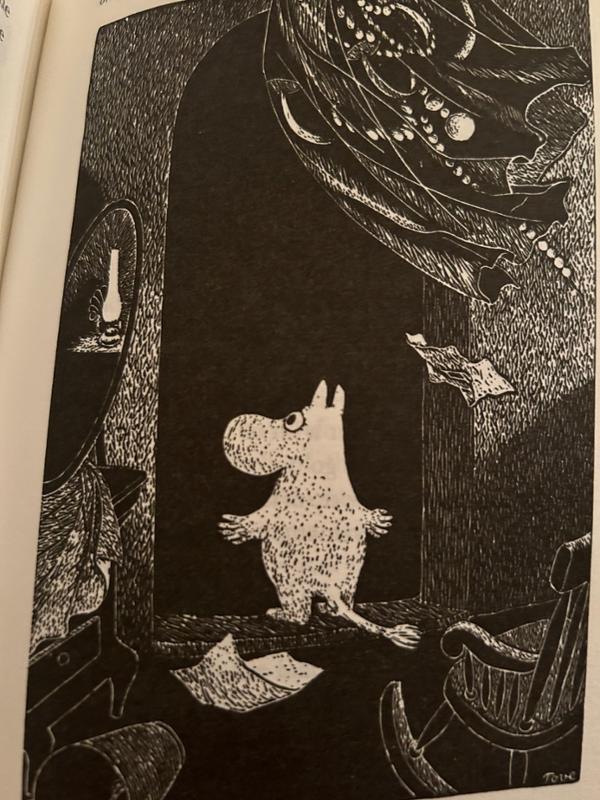
The room was filled with a smell of night and firs, and Moomintroll thought: “Good. A family has to be ventilated at times.” He went out on the steps and started out into the damp darkness.
“Now I’ve got everything,” Moomintroll said to himself. “I’ve got the whole year. Winter too.”
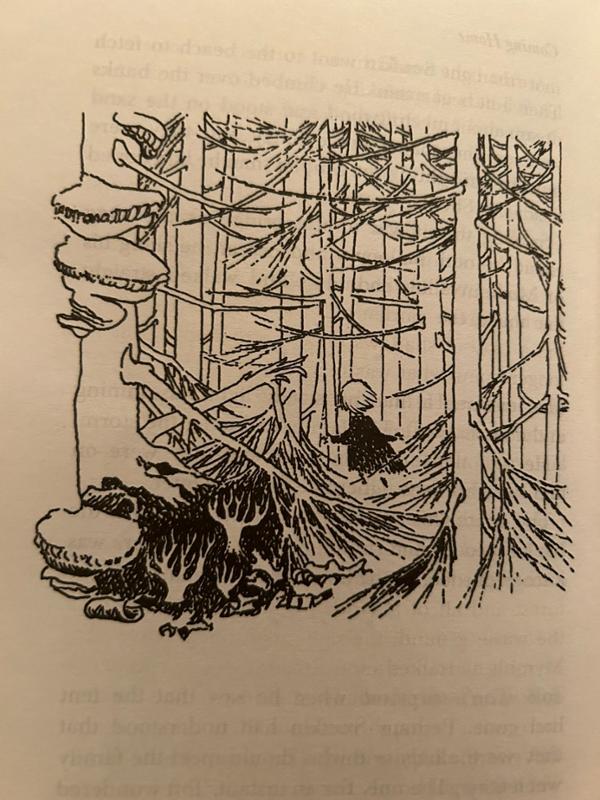
It was a different world. Toft had no pictures and no words for it, nothing had to correspond. No one had tried to make a path here and no one had ever rested under the trees. They had just walked around with sinister thoughts, this was the forest of anger. He grew quite calm and very attentive. With enormous relief the worried Toft felt all his pictures disappear.